
Proposed Change to Chapter 13 Debt Limits Could Help More Los Angeles Homeowners and Business Owners
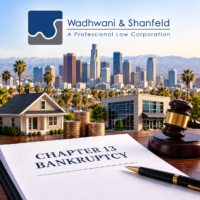
For many families in Los Angeles, Chapter 13 bankruptcy is the best way to stop a foreclosure, catch up on missed mortgage payments, and reorganize debt into a payment plan they can afford. But Chapter 13 is not available to everyone. Federal law caps how much debt a person can owe and still qualify, and in Southern California, where home values and mortgage balances are among the highest in the country, those caps shut out a surprising number of people. At Wadhwani & Shanfeld, our board-certified bankruptcy attorneys are closely following new federal legislation that would raise and simplify the Chapter 13 debt limits, opening the door for many homeowners and small business owners who cannot file under the current rules.
The Current Chapter 13 Debt Limits
Under Section 109(e) of the Bankruptcy Code, an individual can file Chapter 13 only if their debts fall under two separate limits. For cases filed on or after April 1, 2025, those limits are:
- Secured debt: $1,580,125
- Unsecured debt: $526,700
Secured debts are those backed by collateral, such as a mortgage, a home equity line of credit, or a car loan. Unsecured debts include credit cards, medical bills, personal loans, personal guarantees on business debt, and most tax debt. Only debts that are fixed in amount and not dependent on a future event are counted, and if a secured loan is larger than the value of the property securing it, the undersecured portion is generally treated as unsecured debt.
Going over either limit by even one dollar makes a person ineligible for Chapter 13, no matter how far under the other limit they are.
Why These Limits Hit Los Angeles Hard
A first mortgage and a HELOC on a home in the San Fernando Valley, the Westside, or much of Orange County can easily total more than $1.58 million on their own. Add a car loan and many working homeowners are over the secured limit before any other debt is considered. On the unsecured side, small business owners who personally guaranteed a business loan, a commercial lease, or merchant cash advances can cross the $526,700 limit quickly.
When someone is over the limit, their options narrow. Chapter 7 may not protect a home with significant equity or help someone catch up on a mortgage, and an individual Chapter 11 case is far more complex and expensive than Chapter 13. For many families, that difference decides whether they can save their home.
What the Bankruptcy Threshold Adjustment Act of 2026 Would Change
The Bankruptcy Threshold Adjustment Act of 2026 would replace the two separate Chapter 13 limits with a single combined limit of $2,750,000, regardless of how much of that debt is secured or unsecured. The bill would also permanently restore the $7,500,000 debt limit for small businesses filing under Subchapter V of Chapter 11, which dropped to roughly $3.4 million after a temporary increase expired.
This is not the first time Congress has used a combined $2.75 million limit. A 2022 law temporarily adopted the same approach, but it expired in June 2024, and the limits reverted to the separate secured and unsecured caps that apply today. The 2026 bill does not include an expiration date.
The Senate passed its version of the bill, S. 3977, unanimously on August 3, 2026, and the House passed its companion bill, H.R. 7730, by voice vote on September 16, 2026. As of late October 2026, the bill has not been signed into law. If it is enacted, the new limits would apply only to cases filed on or after the date it becomes law, not to cases already pending.
Who Would Benefit
A combined $2.75 million limit would make Chapter 13 available to many people who are currently shut out, including:
- Homeowners with large first and second mortgages who are behind on payments and facing foreclosure
- Owners of rental or investment property with significant secured debt
- Small business owners carrying personal guarantees on business loans or leases
- Individuals with modest secured debt but large unsecured balances from medical bills, lawsuits, or judgments
For these filers, Chapter 13 offers powerful tools. It can stop a foreclosure sale, give you three to five years to cure mortgage arrears, and in some cases eliminate a wholly unsecured second mortgage, all at a fraction of the cost of Chapter 11.
What to Do If You Are Over the Limit Right Now
If you are close to or above the current Chapter 13 limits, timing matters. Depending on your situation, it may make sense to file now under Chapter 7 or Chapter 11, or it may be worth waiting to see whether the new limits take effect. That decision depends on how close a foreclosure sale or garnishment is, how your debts are calculated, and what you need to protect. Our attorneys can review your debts, explain exactly how the limits apply to you, and help you choose the strongest path. Business owners should also look at whether small business bankruptcy options under the restored Subchapter V limit could resolve both personal and business debt.
Chapter 13 Debt Limit FAQs
Are the new Chapter 13 debt limits in effect now?
No. As of late October 2026, both the Senate and the House have passed versions of the bill, but it has not been signed into law. Until it is, the current limits of $1,580,125 in secured debt and $526,700 in unsecured debt continue to apply.
If the bill becomes law, will it help a case I have already filed?
Generally, no. The new limits would apply to cases filed on or after the date the law takes effect. If you have a pending case and believe you would qualify under the new limits, talk to your attorney about your options.
How are secured and unsecured debts counted for Chapter 13?
Only debts that are fixed in amount and not contingent on a future event count toward the limits. Secured debt is counted up to the value of the collateral, and any amount owed beyond that value is generally counted as unsecured debt.
What happens if my debts are over the Chapter 13 limits?
You may still be able to file Chapter 7, or an individual Chapter 11 case, which allows reorganization without debt limits but is typically more expensive and complex. An experienced bankruptcy attorney can help you compare the options.
Are Chapter 13 debt limits different in California?
No. The debt limits are set by federal law and apply nationwide. What is different in California is the cost of housing, which pushes many more homeowners over the secured debt limit than in other parts of the country.
Talk to a Board-Certified Los Angeles Bankruptcy Lawyer
Whether you are well under the limits or wondering if a change in the law could make Chapter 13 bankruptcy possible for you, Wadhwani & Shanfeld can help you understand where you stand today and plan your next step. Our board-certified attorneys have helped more than 30,000 individuals and families across Southern California since 2005. Call us for a free consultation, and speak directly with an attorney about protecting your home and your future.
